
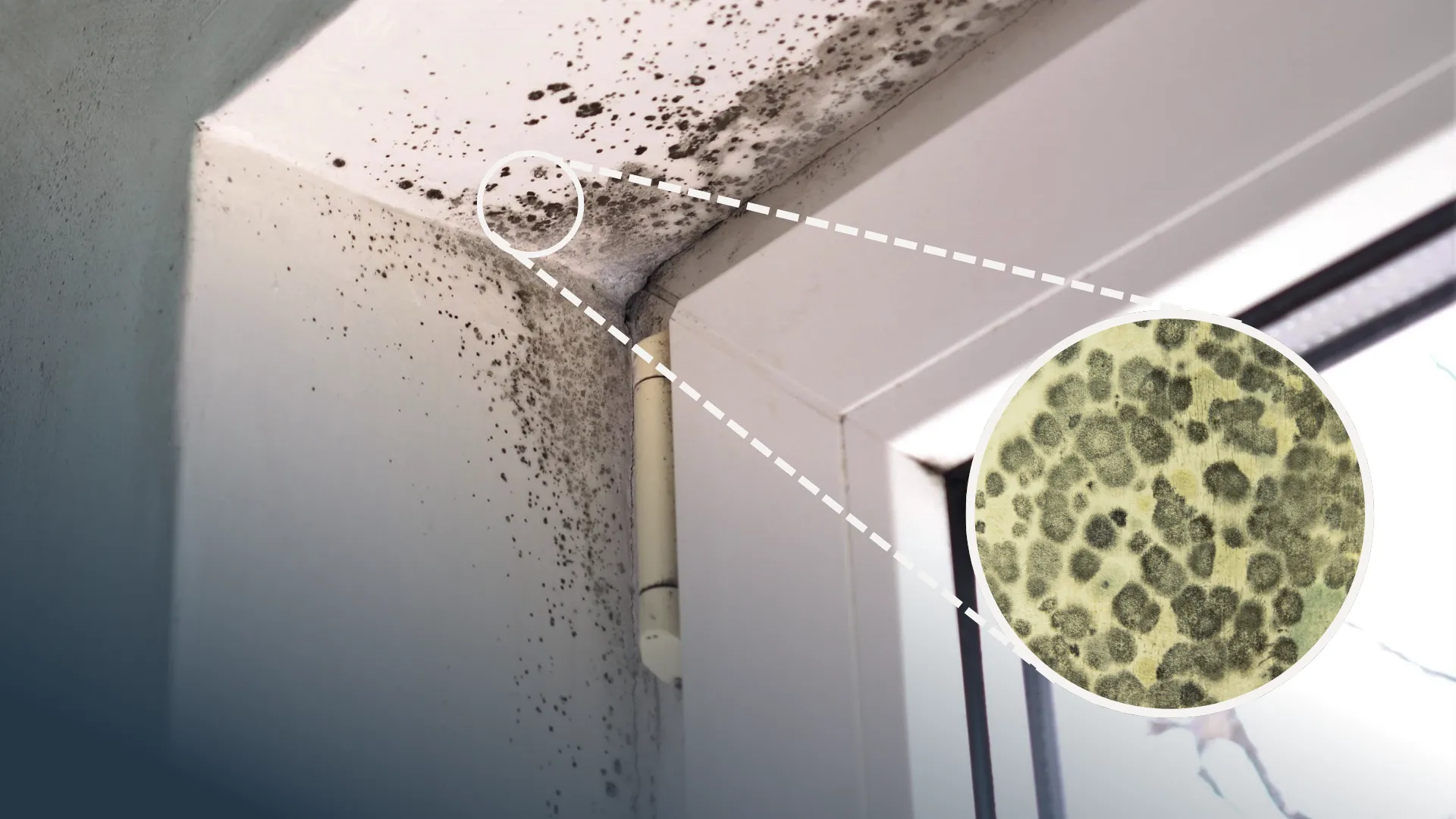
Mold can appear even in a newly built house. The main cause is usually excessive moisture combined with insufficient ventilation.
Concrete, plaster, screed and other building materials contain water that needs time to dry. If the house is closed and heated before the materials have dried properly, condensation can form and lead to mold.
In a well insulated house, humid air needs to be removed regularly. Without proper ventilation, indoor humidity can build up and create conditions for mold growth.
Poorly insulated areas such as corners, wall joints, window areas and floor or ceiling connections can become colder and encourage condensation.
Problems with the roof, foundation, waterproofing, windows or plumbing can allow water to enter the building and create favorable conditions for mold.
If thermal insulation, waterproofing or vapor barriers are installed incorrectly, moisture can accumulate inside walls and building structures.
To prevent mold, the house should be properly dried after construction, ventilated regularly and protected against water infiltration. Thermal bridges should also be minimized through a properly designed and installed insulation system.
If mold keeps returning after cleaning, simply removing it from the surface is not enough. The source of the moisture needs to be identified and eliminated.