
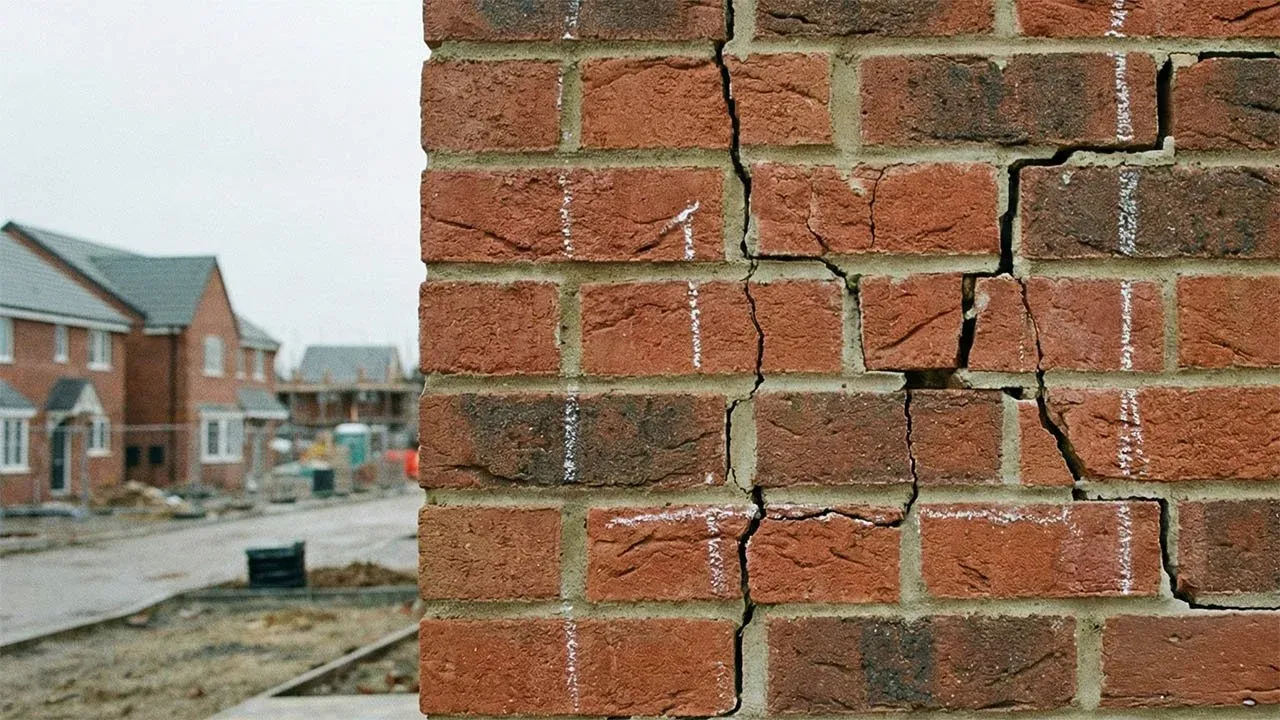
Cracks in the walls of a new house do not always mean there is a serious problem. Some may appear because of normal material drying and shrinkage, while others can indicate construction defects or structural issues.
After construction is completed, the soil and building elements may continue to settle. Uneven settlement can cause cracks to appear in the walls.
Concrete, plaster and masonry can slightly change their volume as they dry. This can cause small cracks, especially during the first few years.
A poorly designed or incorrectly built foundation can transfer stress to the walls and cause more serious cracking.
Poor workmanship, insufficient reinforcement or incorrect connections between different materials can contribute to cracking.
Removing walls, changing openings or making other modifications without technical assessment can affect the building's structural performance.
Not every crack is dangerous, but it is important to monitor how it develops. Cracks that become wider, repeatedly reappear, pass through structural elements or are accompanied by deformation and problems with doors or windows should be assessed by a specialist.
The earlier the cause is identified, the easier it is to prevent more serious and expensive problems.