
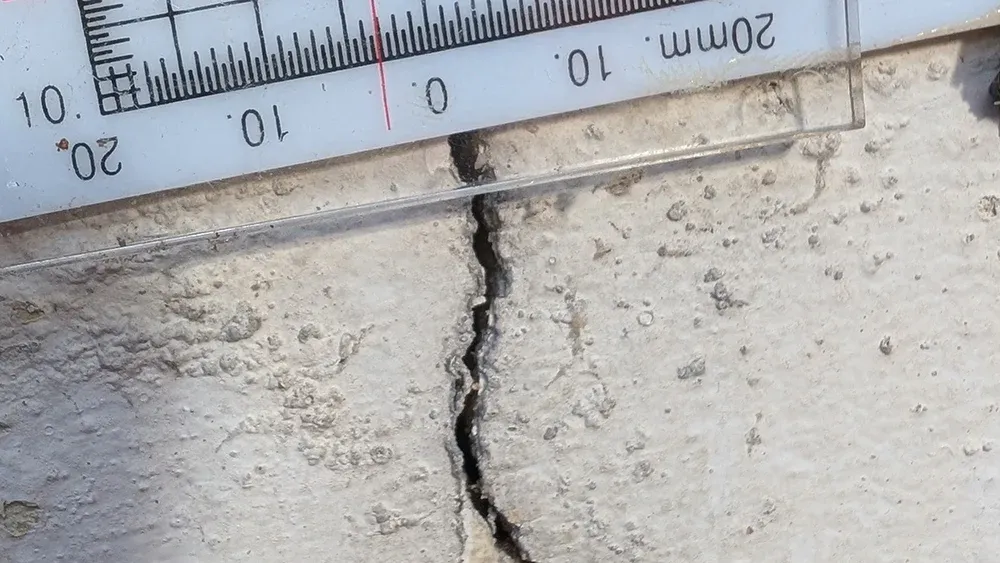
Not every crack in a house is a sign of a serious problem. Some fine cracks can appear because of material drying and shrinkage, while others may indicate foundation or structural issues.
If a crack becomes longer or wider over time, the process that caused it may still be active and should be investigated.
Visible and pronounced cracks are more concerning than very fine ones, especially when they pass through masonry or structural elements.
Diagonal cracks, especially those starting from the corners of windows or doors, may indicate movement or settlement of the building.
Cracks in beams, columns, reinforced concrete belts or other load-bearing elements should be assessed by a specialist.
Doors and windows that start sticking, deformed floors, leaning walls or several cracks appearing at the same time can indicate a more serious issue.
If a crack is growing, reappearing or accompanied by deformation, it should not simply be covered with plaster or filler. The cause should be identified first.
For suspicious cracks, the safest approach is to have a structural engineer or qualified construction specialist inspect the building before carrying out repairs.