
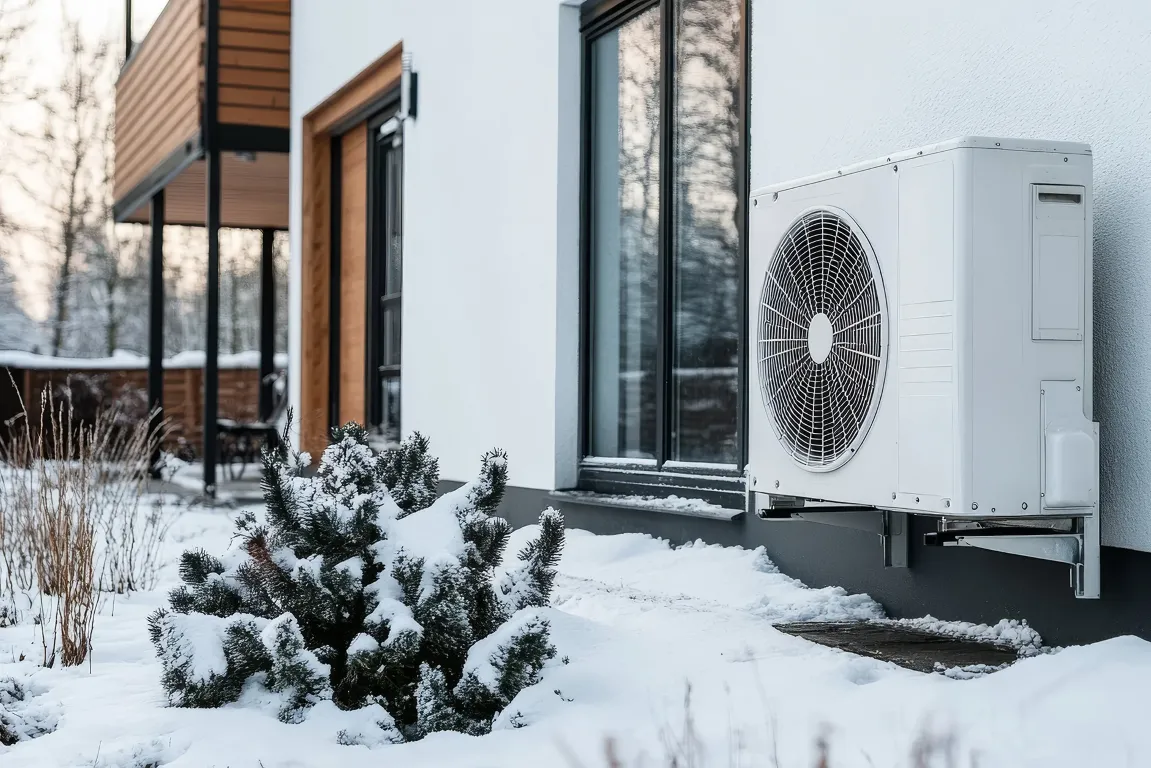
The electricity consumption of a heat pump depends on the size of the house, insulation quality, outdoor temperature, desired indoor temperature and heating system.
For a new, well insulated house with underfloor heating, electricity consumption can be significantly lower than with an electric boiler. A heat pump transfers heat from the air, ground or water into the house. Under favorable conditions, it can produce approximately 3 to 5 kWh of heat for every 1 kWh of electricity it consumes.
For example, if a house requires around 10,000 kWh of heat per year and the heat pump has a seasonal COP of 4, it would consume approximately 2,500 kWh of electricity. In reality, consumption can be higher during very cold periods because the system becomes less efficient.
A poorly insulated house with high heat losses and radiators that require higher water temperatures can consume significantly more electricity. This is why consumption should not be estimated based only on the heat pump's rated power.
For a realistic calculation, the home's heat losses, size, insulation, desired indoor temperature and climate conditions should all be considered. The better the house is insulated and the lower the required heating temperature, the more efficiently a heat pump can operate.