
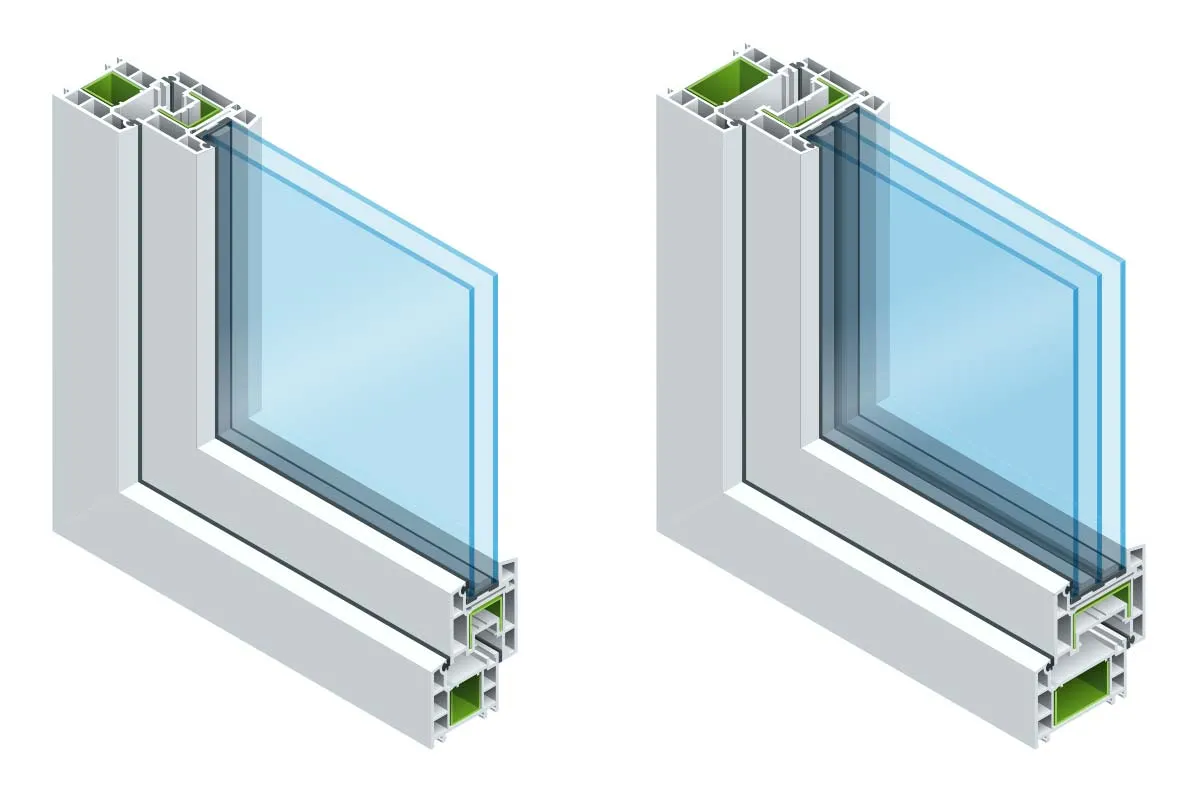
The choice between double and triple glazing depends on the desired level of thermal insulation, window orientation and available budget.
Double glazing has two panes of glass and is suitable for many homes. It is lighter and generally more affordable.
Triple glazing has three panes and usually provides better thermal and acoustic insulation. The inner glass surface stays warmer during winter, which can reduce the risk of condensation and improve comfort.
However, triple glazing is heavier and more expensive. Having three panes does not automatically mean that a window is better. The frame, spacer, gas between the panes, airtightness and installation quality also matter.
For a new house, triple glazing can be a good choice when high energy efficiency is a priority. For some rooms and projects, however, high-quality double glazing may be sufficient.
The right choice should be made based on the entire window system rather than simply the number of glass panes.